French Drain Install, Grading Fix and Full Lawn Restoration
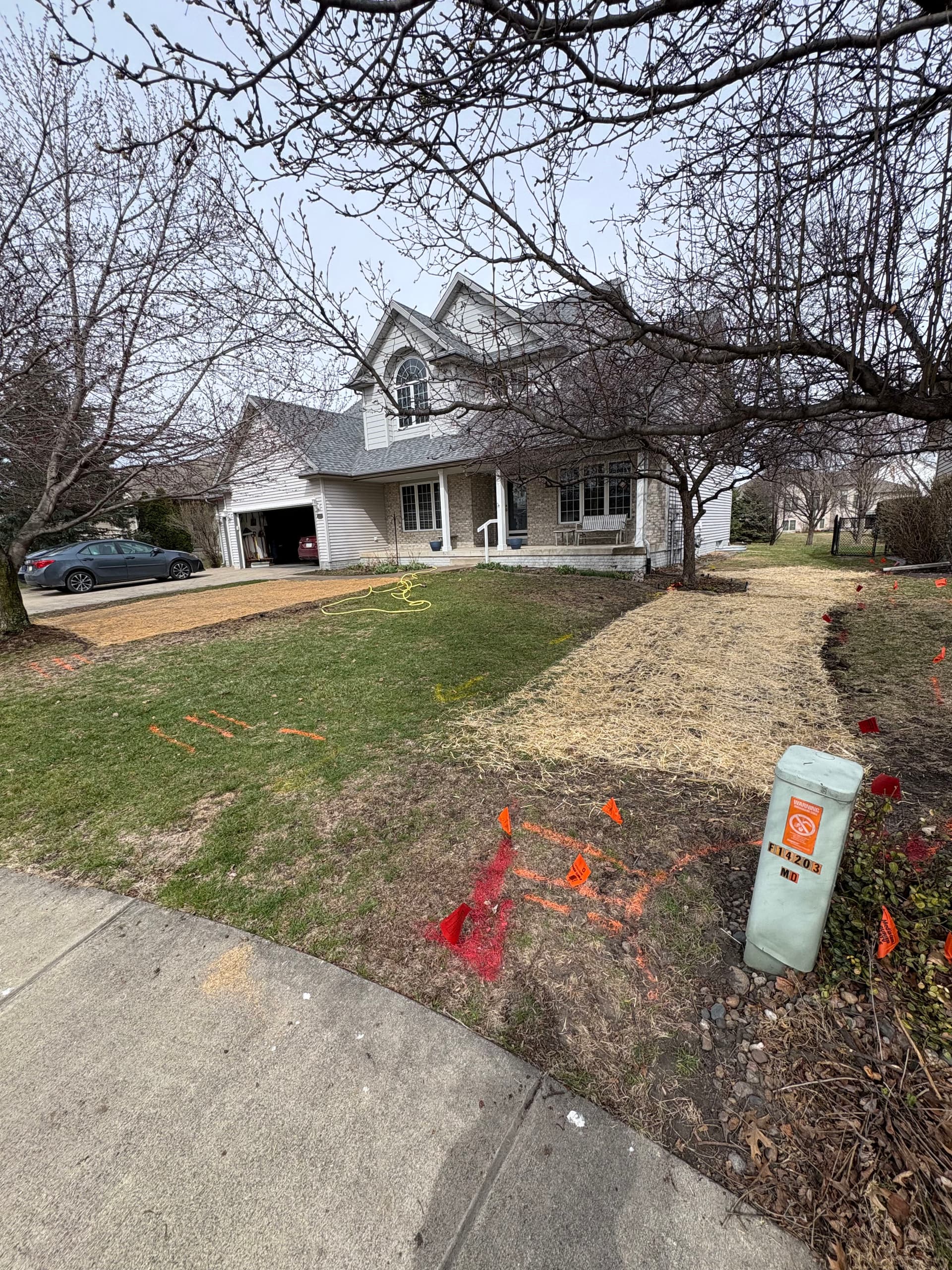
Standing water and low spots in a yard aren't just an eyesore - they're a sign that something underneath needs attention. Water sitting near a foundation causes real problems over time. This yard had drainage issues that were tearing up the grass and creating soft, uneven ground that wasn't going away on its own.
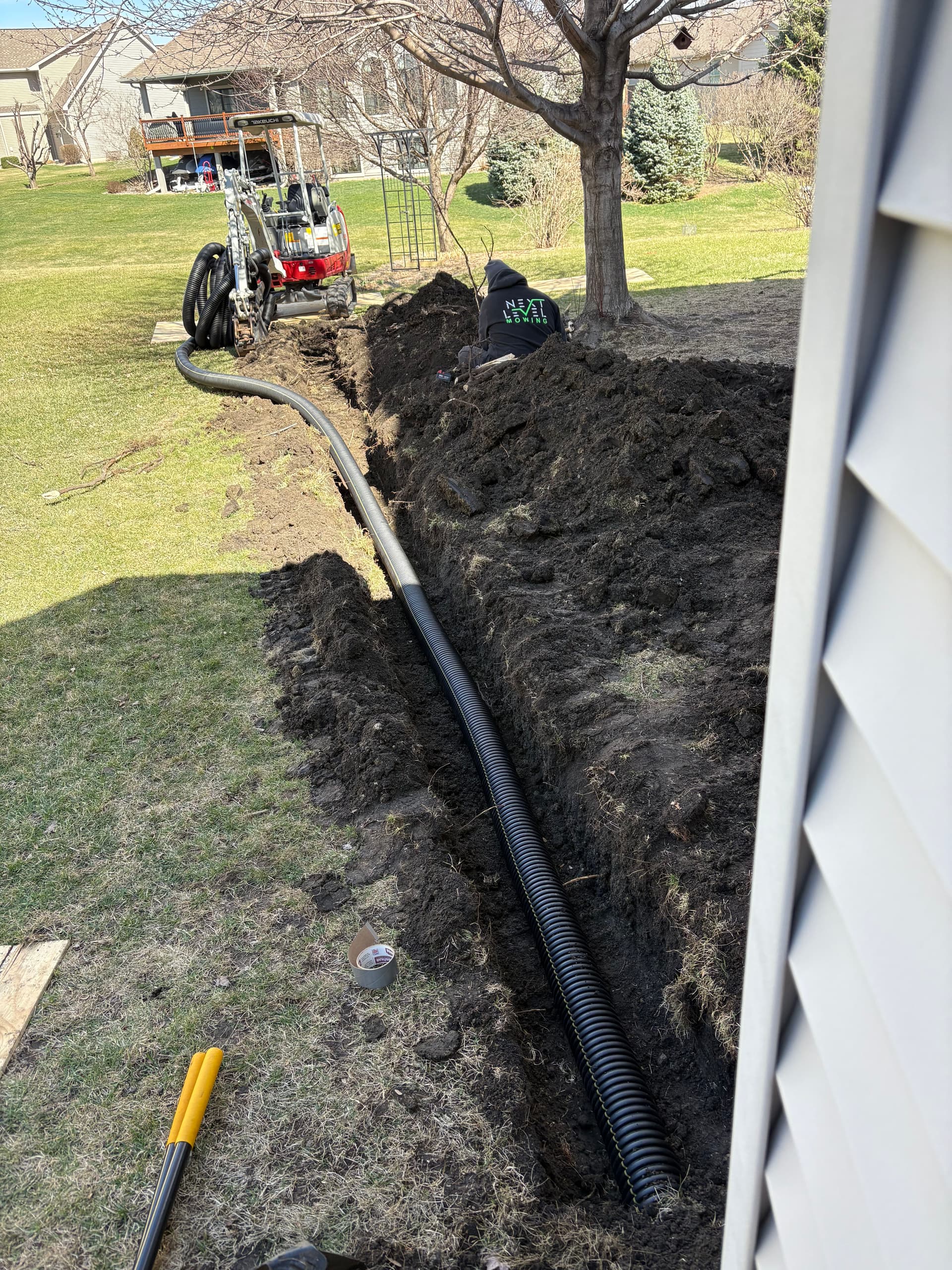
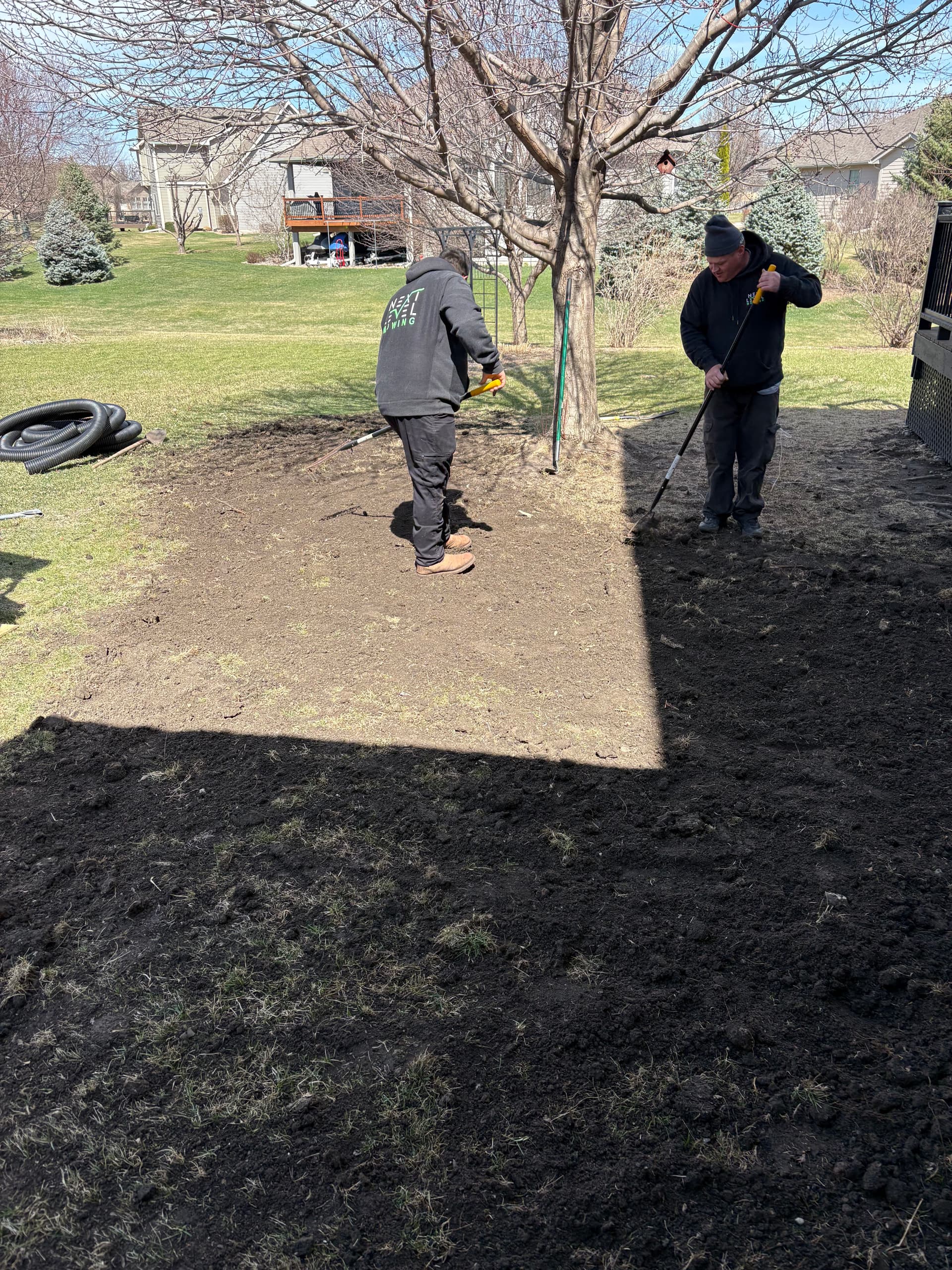
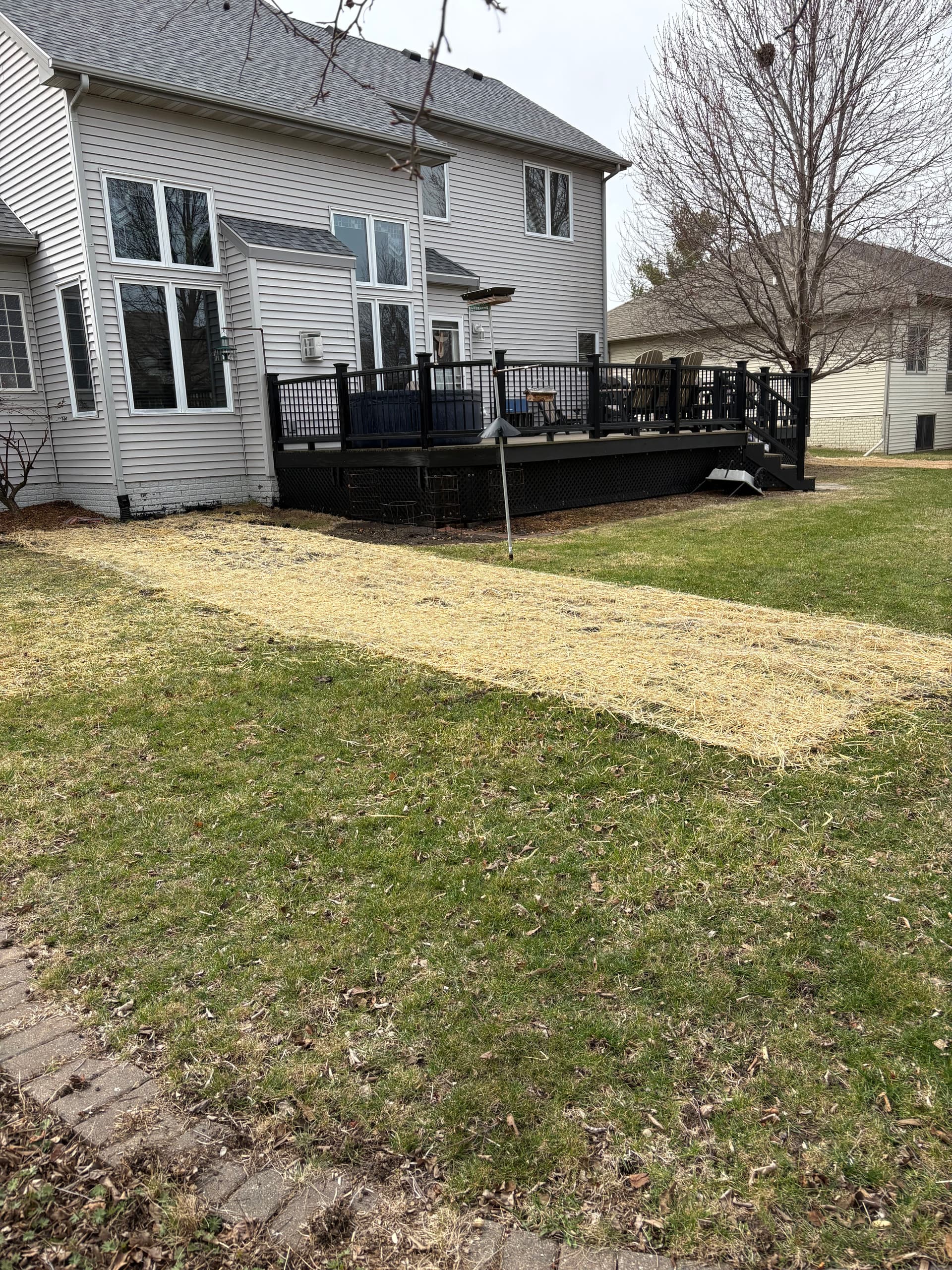
We started by digging the trench and running a French drain with Easy Drains along the foundation line. That's the backbone of the whole fix - getting the water routed away properly so it stops pooling where it shouldn't. Once the drain was set, we brought in black dirt to fill around the foundation, then worked through the low spots across the yard, raking and leveling everything out by hand to get a smooth, even base.
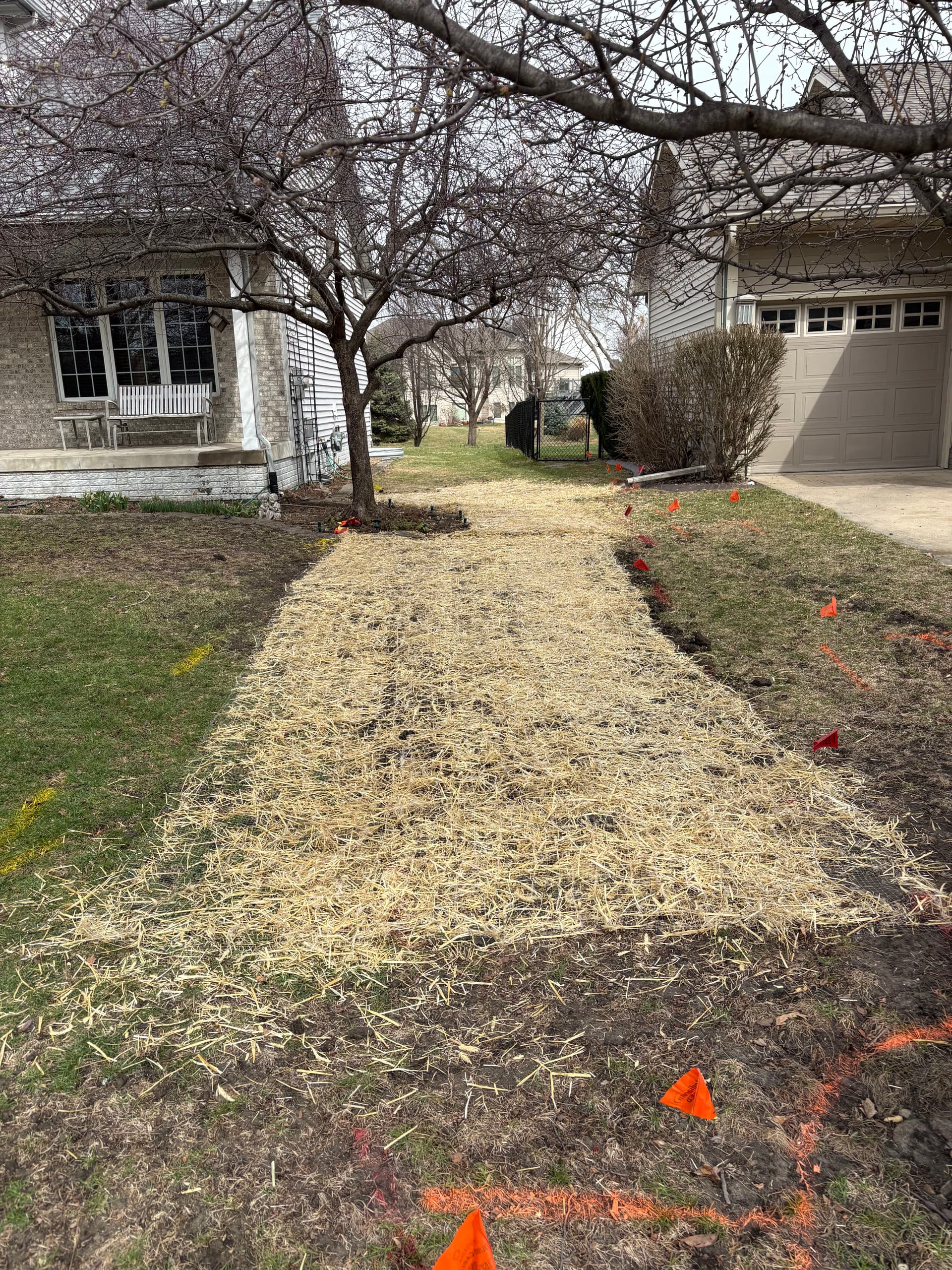
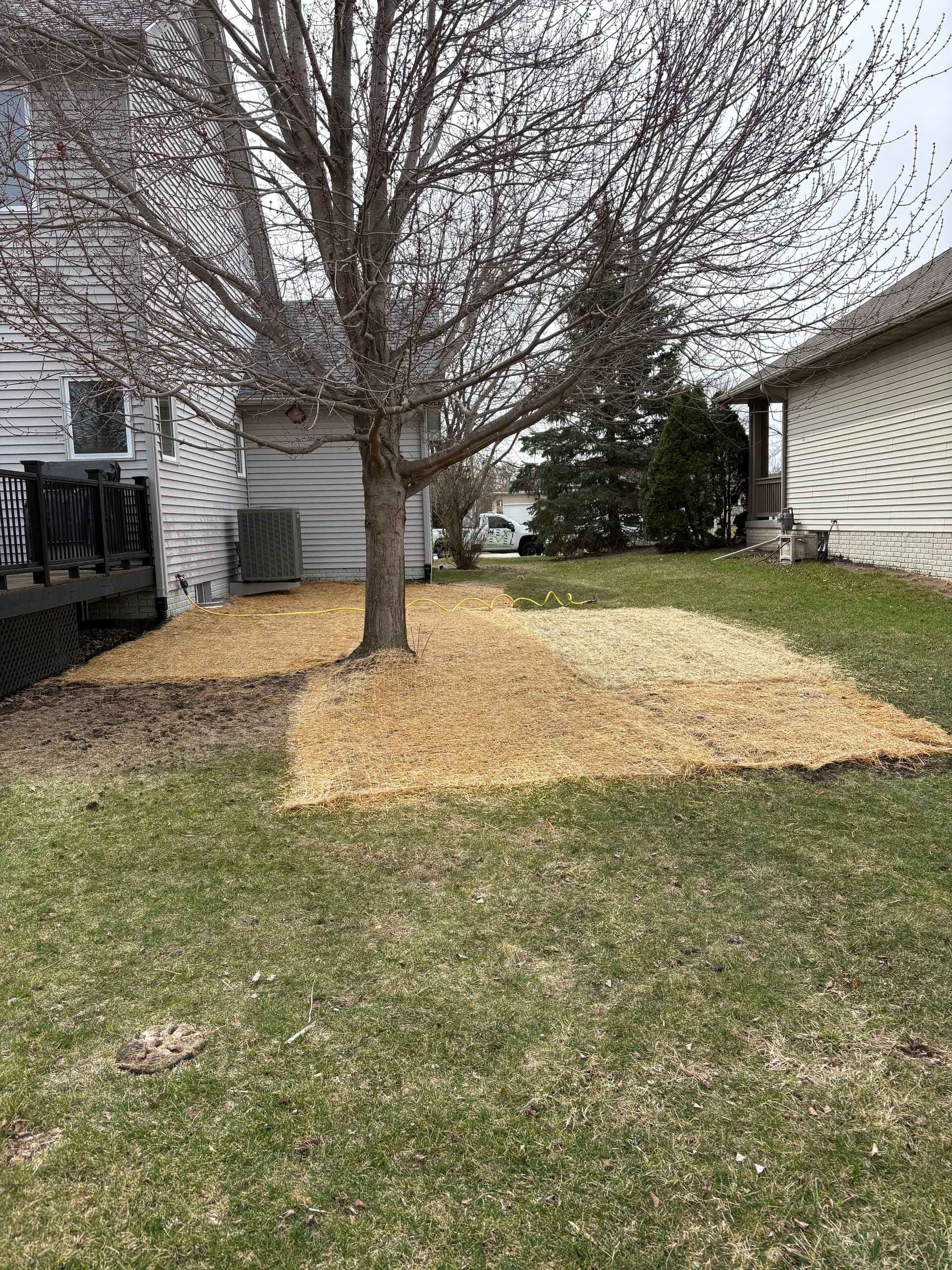
With the grading sorted, we overseeded the disturbed areas and laid erosion blanket over the top. That blanket does a few things at once - it holds the seed in place, retains moisture, and protects the soil surface while the grass gets established. We also set up automatic watering timers to keep things consistently watered without the homeowner having to think about it every day.
That last part matters more than people realize. Seed needs consistent moisture to germinate well, and leaving it up to chance - or a busy schedule - is how you end up with patchy results. The timers take that variable out of the equation completely. It's one of those small details that makes a big difference in how the lawn comes back.
From trench to finished seed bed, this was a full drainage and lawn restoration done the right way. No shortcuts on the grading, no skipping the blanket, no hoping the seed figures it out on its own. The yard is set up to come back thick and healthy.